World’s first agent-driven student management system.For teachers, by teachers.
ScrollElevate your teaching. Automate the work behind it.
AI agents write the material, mark the scripts, watch the class, talk to your students and keep your calendar. You approve what matters.
Start freeFree while in beta. No card, nothing to install, nothing for students to download.
Agents write your syllabus, lecture notes, quizzes and papers from your own material. You edit. You never start from blank.
Several agents read every script and mark it against your rubric, with the passage beside each mark, then wait for you. You approve. You do not re-read.
Agents keep the marksheet and reports current, spot the students slipping, and tell you what to do about it. Advice, not a spreadsheet.
Students submit from a phone and hear from an agent on a routine: reminders, released marks, feedback, a recheck when they ask. No email chains.
An agent keeps your inbox, your calendar and the term’s schedule: deadlines set, office hours booked, routine email answered in your voice. You open a tidy inbox.
Everything they make and everything students hand in is filed in the course library, and nothing reaches a student until you approve it. The judgement stays yours.
This is teaching without the paperwork.
How it works
Six jobs, in the order a term needs them. The agents do the work and wait. You read, change what you like, and approve.
Write the material
AgentsDrop in what you have: last year's slides, a chapter, your notes. The agents draft the syllabus, lesson plans, lecture notes, quizzes and exam papers from it, in an editor, from your course's own material.
YouRead it, change what you like, and it is filed in the course library.
GoneStarting a syllabus, a lecture or a quiz from a blank page.
Mark every script, then wait for you
AgentsStudents submit from a phone. Several agents read every page and mark each answer against your rubric, with the passage, a one-line reason and how sure they are beside every mark. Where they disagree, the script is flagged.
YouRead the flagged ones. Approve the rest in a pass. Nothing is released until you say.
GoneThe first read of every script. The whole weekend it took.
Watch the class and say what to do
AgentsAs marks are approved, the marksheet, the class report and question difficulty update themselves. The agents spot the students slipping and the question everyone missed, and tell you what to do about it.
YouRead a short report, not a spreadsheet. Act on the three names it gives you.
GoneBuilding the class report by hand. Copying marks across.
Keep in touch with the students
AgentsA reminder before a deadline, marks and feedback the moment you release them, a reply to the question twenty people asked, a logged recheck when a student asks for one. All in the class channel and the student's portal, on a routine.
YouStep in when it matters. The rest already went out.
GoneRelaying results by email and answering the same question twenty times.
Keep your calendar and inbox
AgentsThe term lives in one calendar: lectures, office hours, quiz and assignment dates, the midterm. The agent books office hours, moves a deadline when you say, prepares the next class the day before, and answers routine email in your voice.
YouOpen a tidy inbox and a week that is already laid out.
GoneDiary juggling. The Sunday-night email backlog.
Approve, release, file
AgentsEverything the agents make and everything students hand in is filed in the course library, by folder and by class. Marks, feedback and material wait in one queue for your approval, doubt first.
YouOne pass through the queue. Release. The marksheet, the portal and the library update themselves.
GoneTallying totals and typing marks into a spreadsheet. Hunting for files.

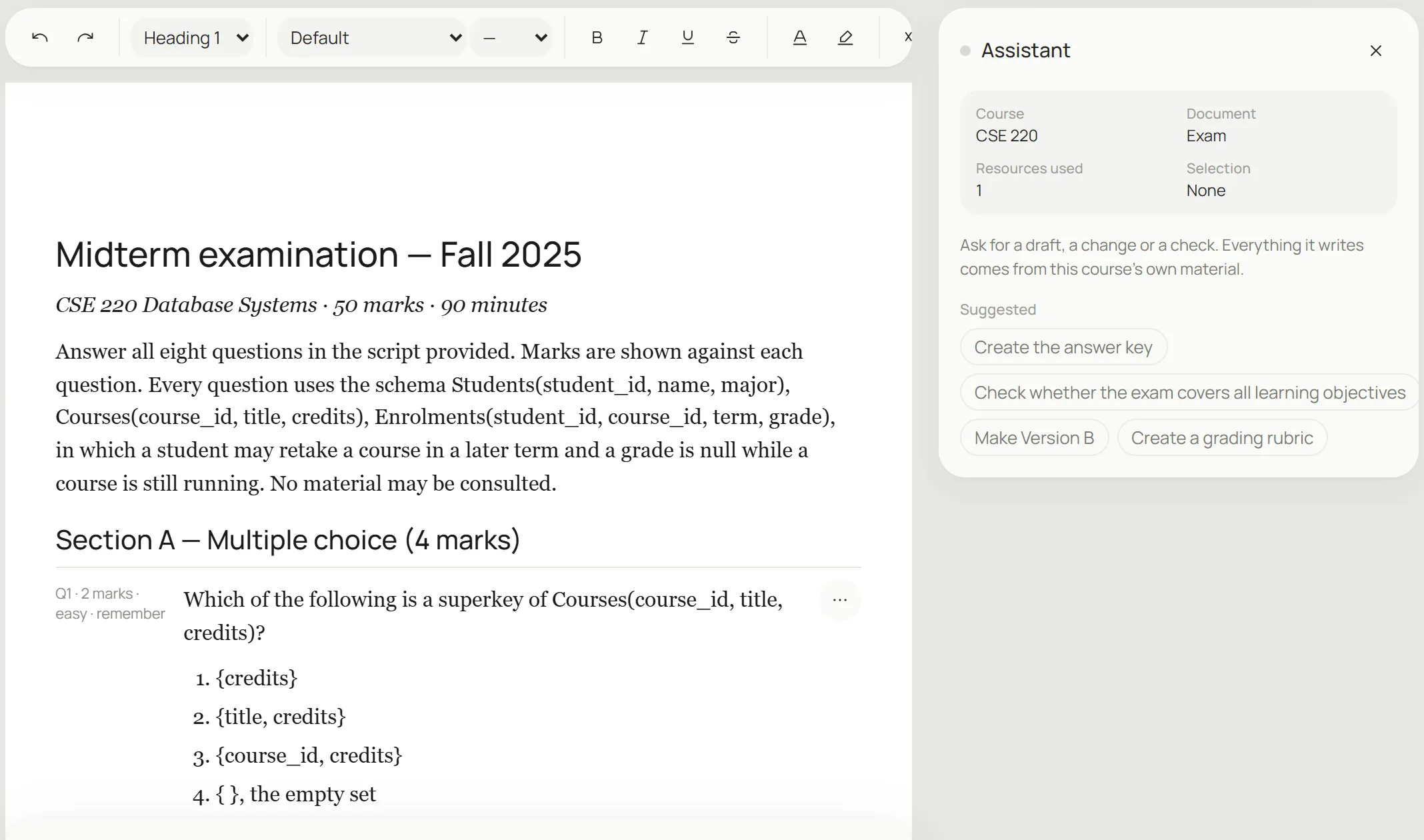
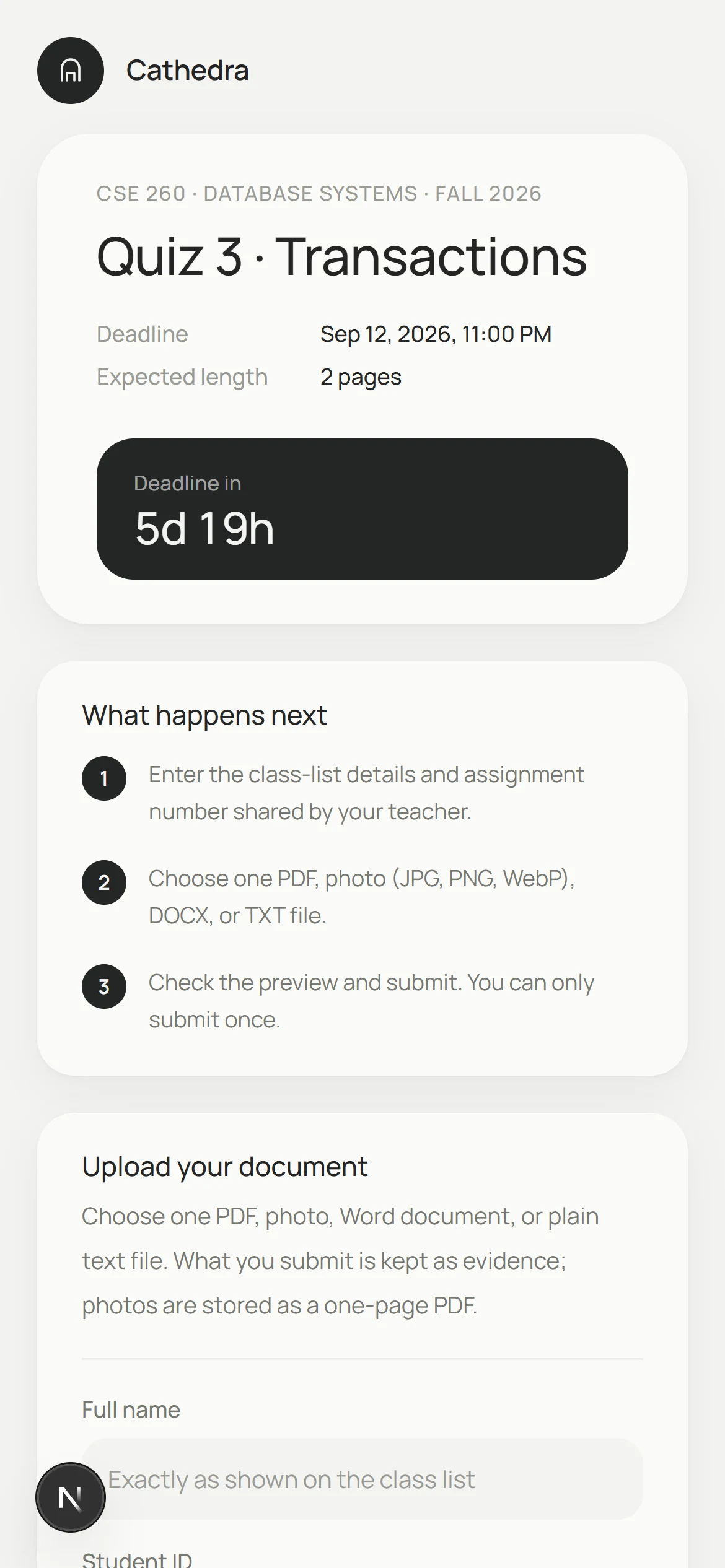
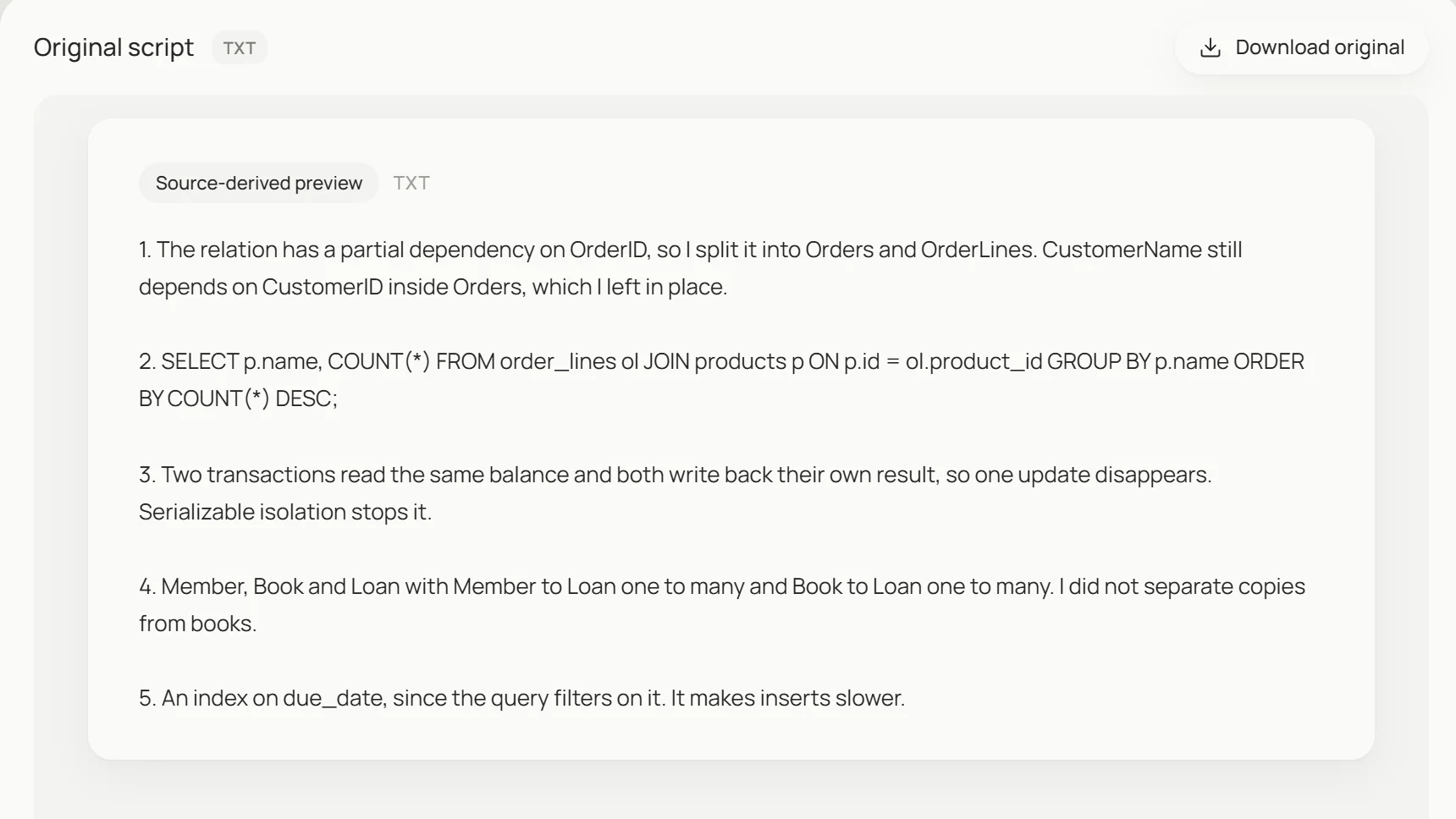
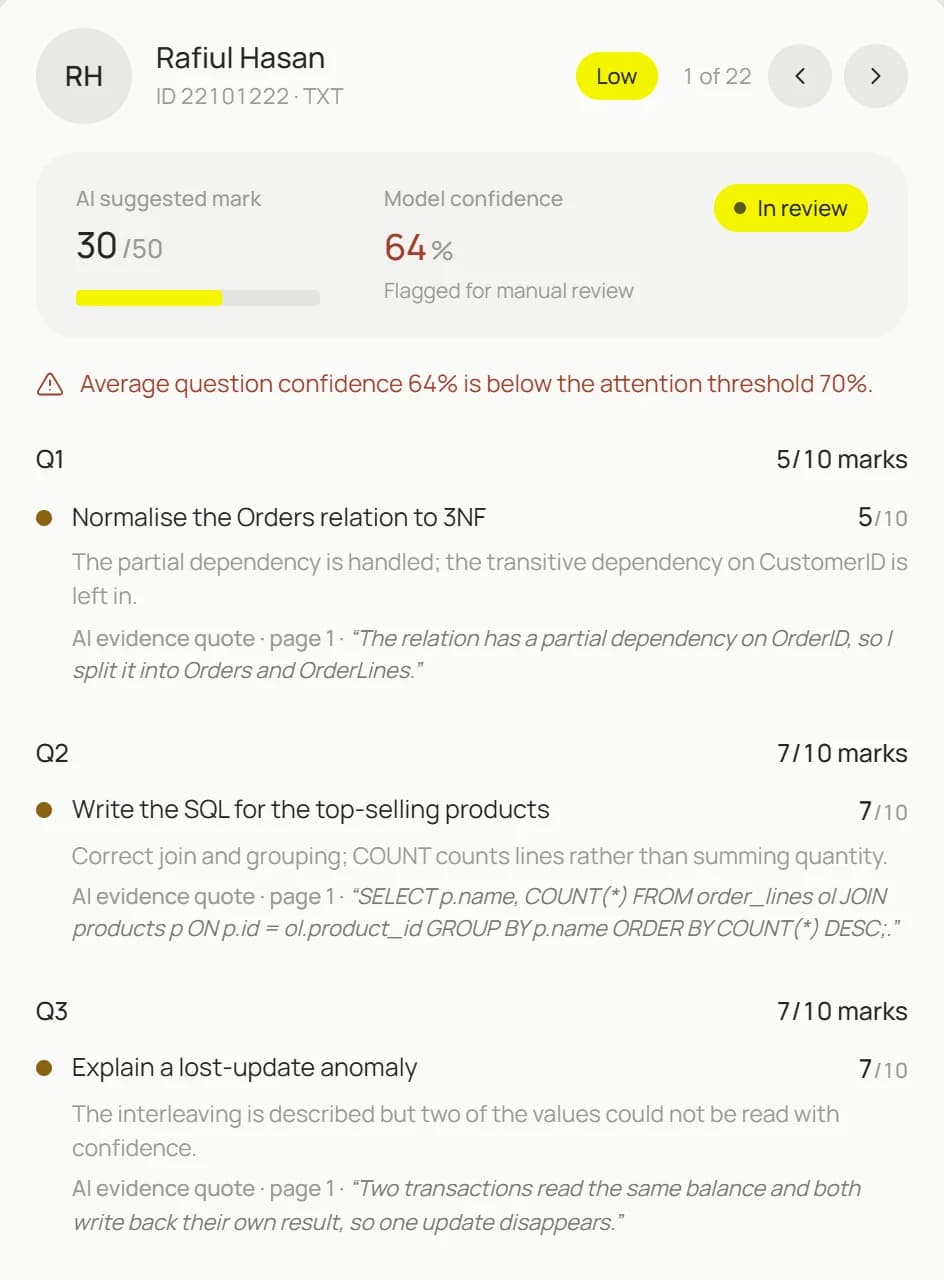
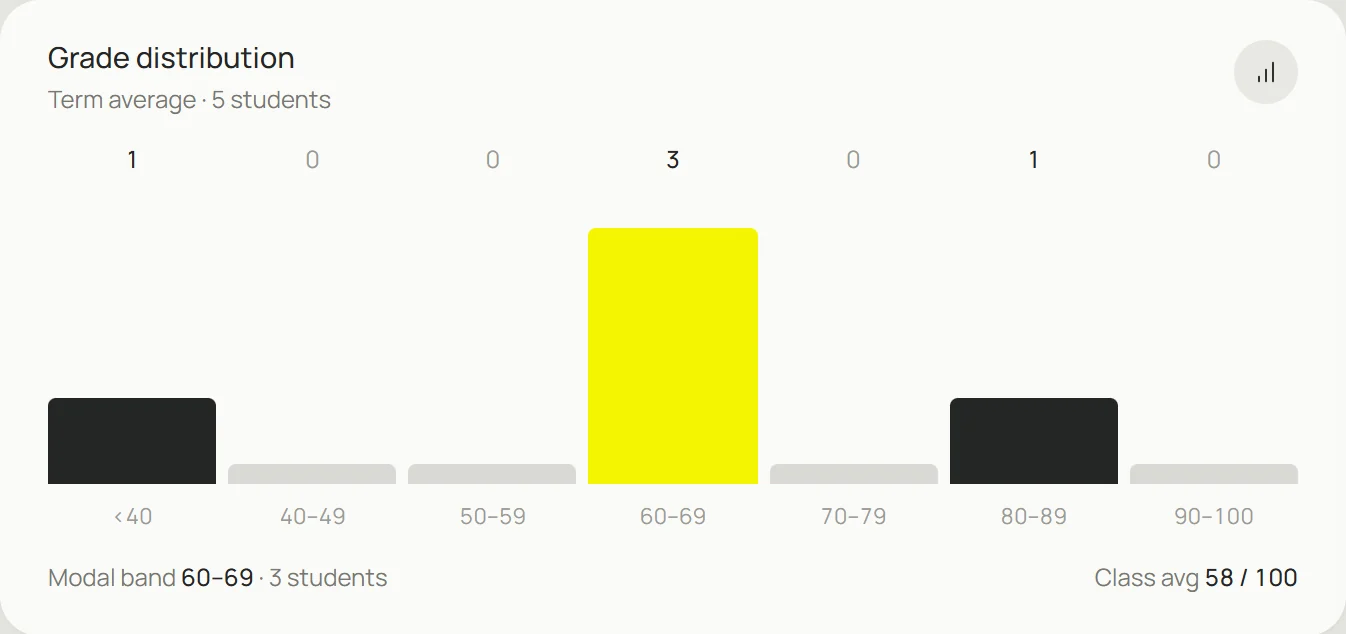
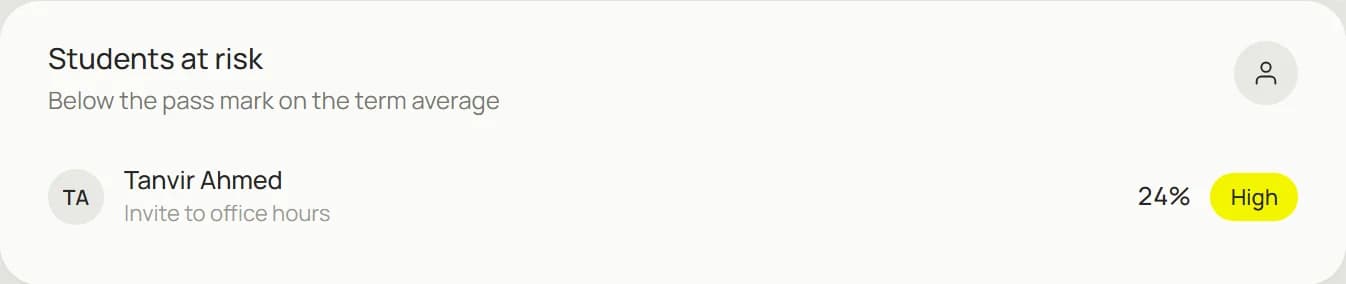
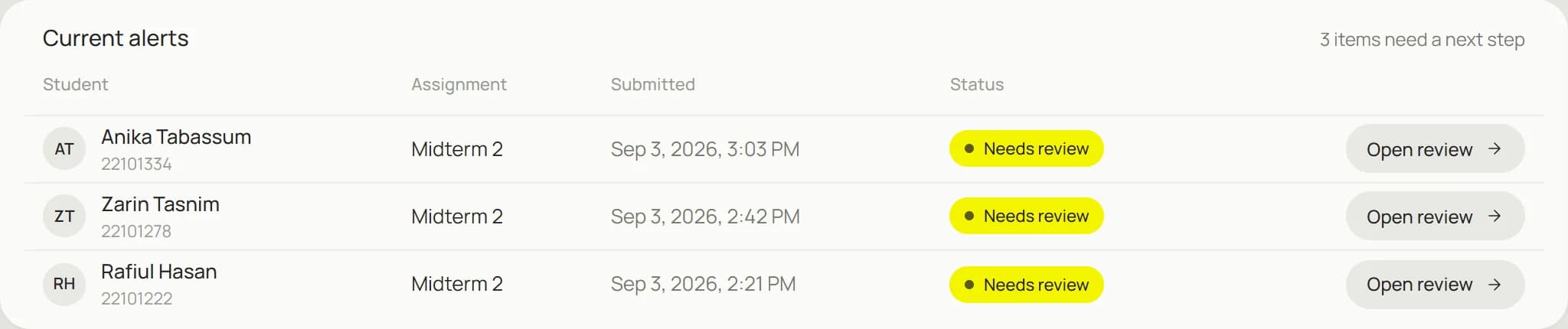
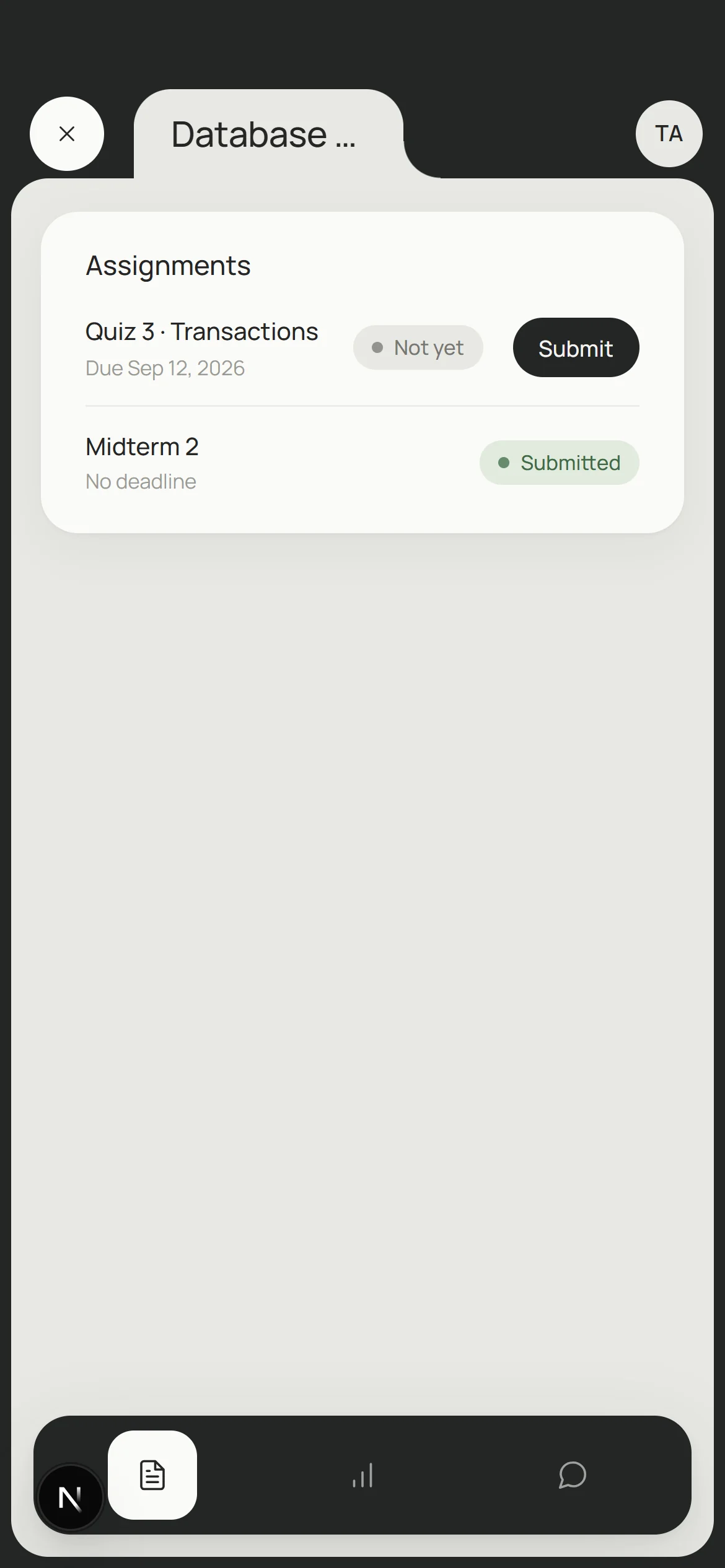
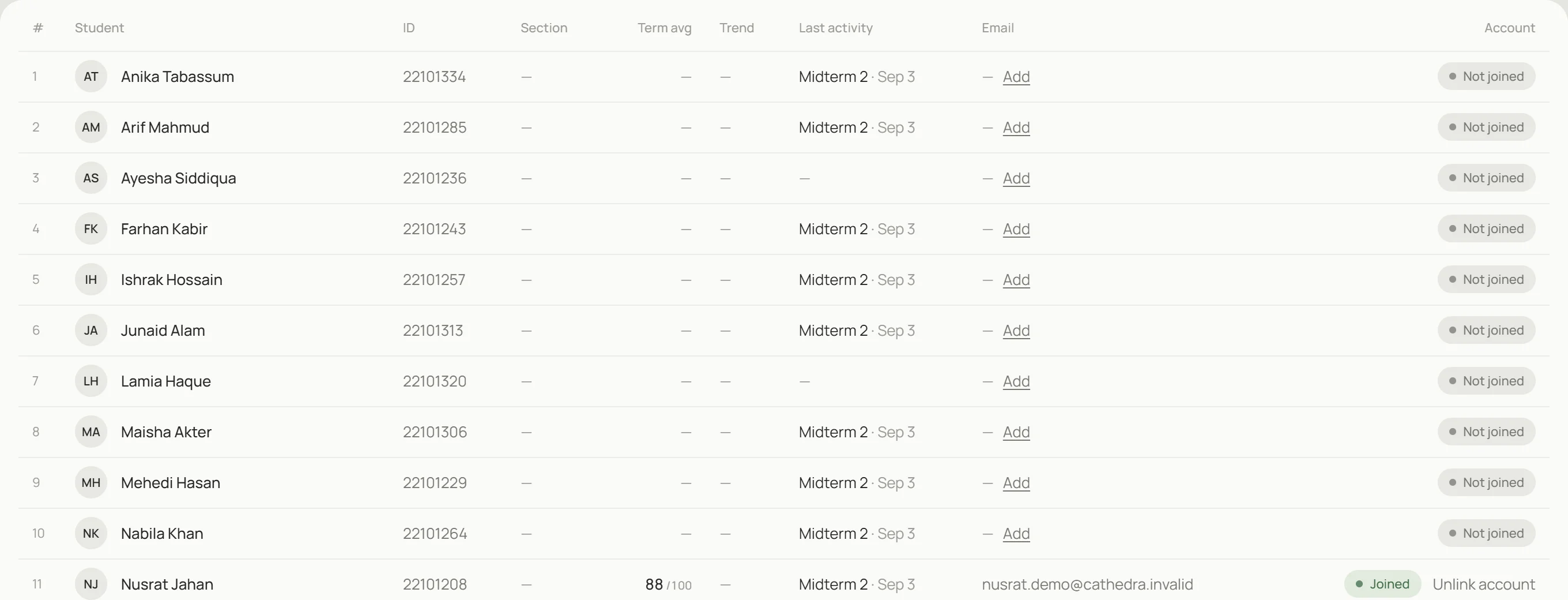
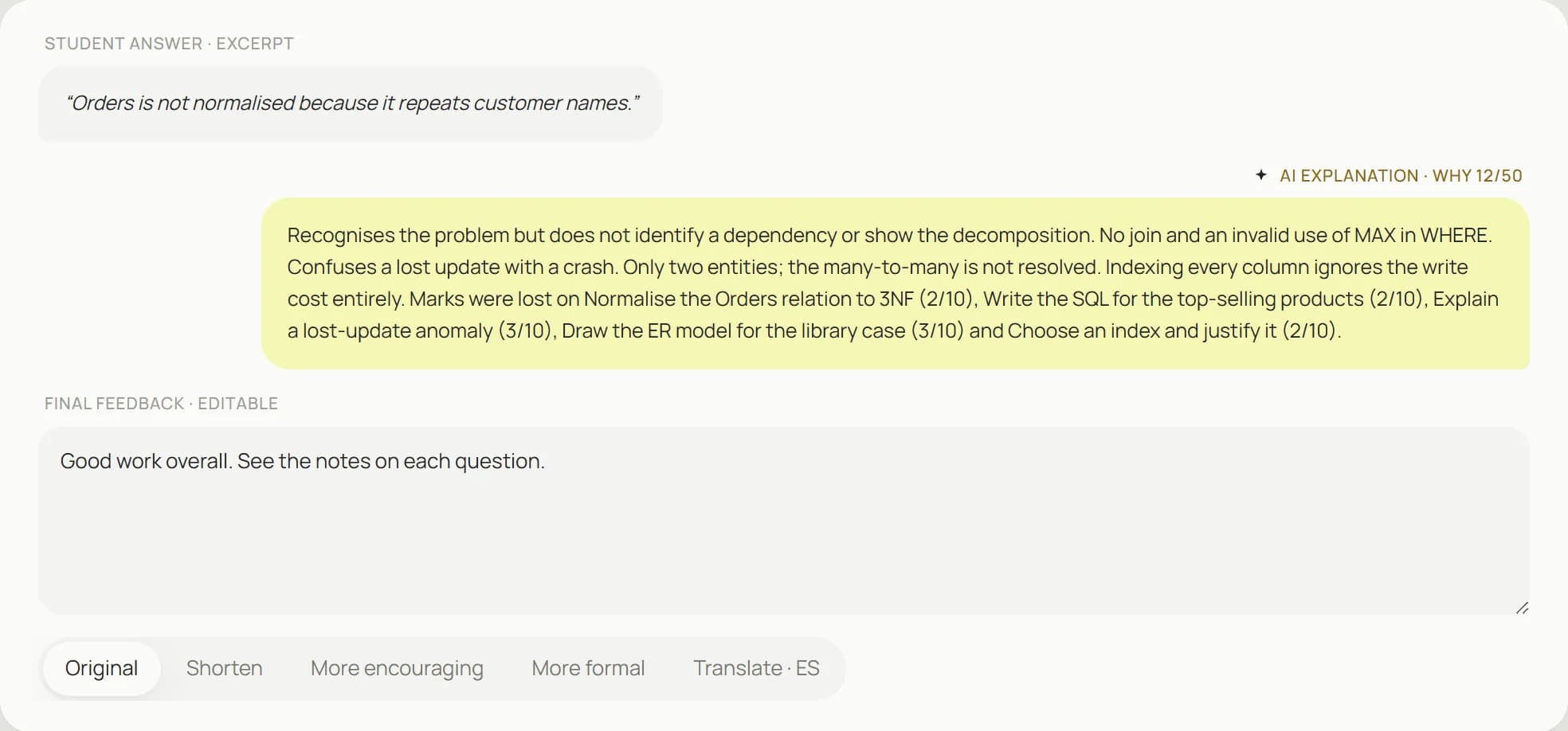
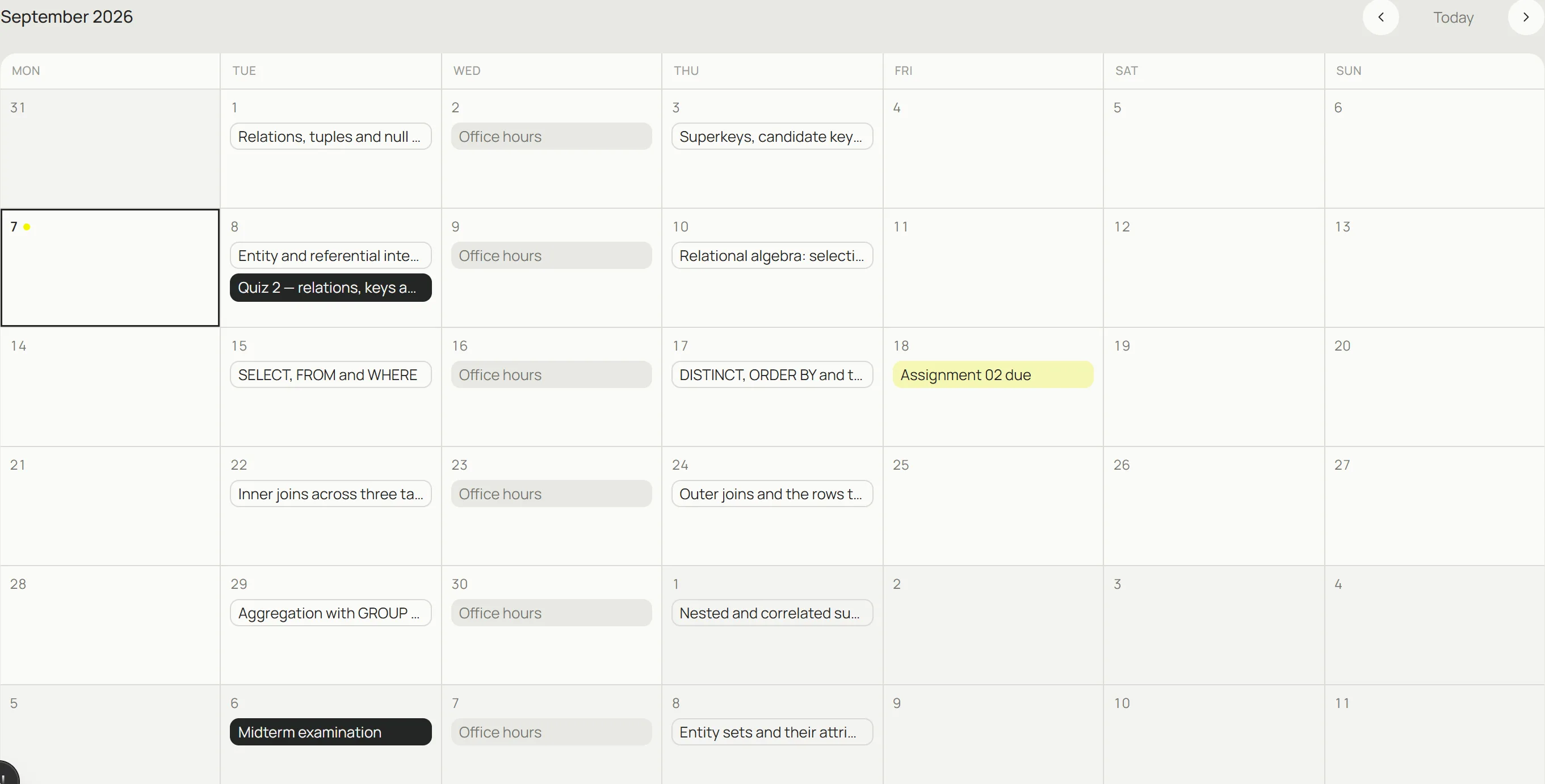


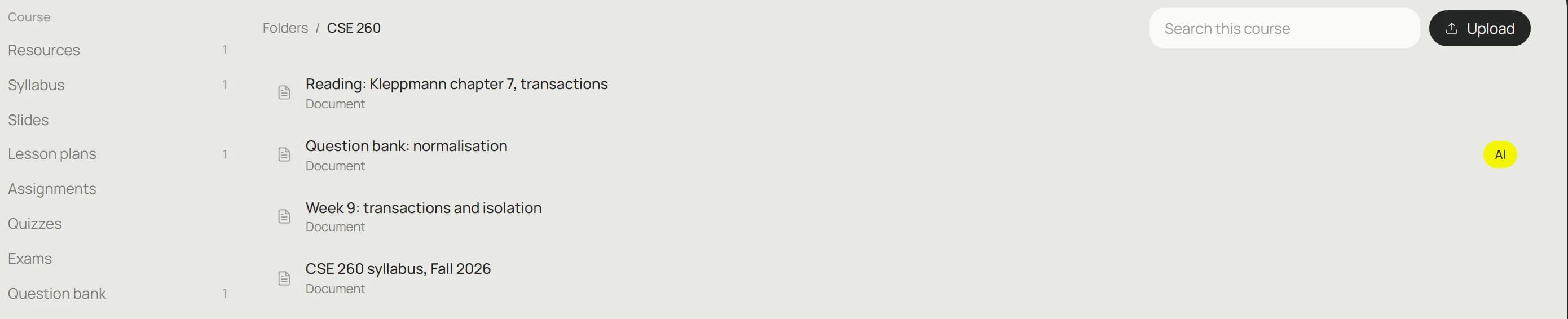

Pictures are of the product, on a demonstration class.
Pricing
01. Free
$0always
Enough to mark a real assignment and judge it for yourself.
25 scripts a month
- One class
- Student submission links
- Rubric proposed from your question paper
- Evidence-linked marks and drafted feedback
- Full review queue and approval
02. Teacher
Most teachers$19per month
For one teacher marking their own classes, every week.
300 scripts a month, then $0.10 each
- Unlimited classes and rubrics
- Reusable class lists
- Grade and feedback export (CSV)
- Assignment analytics
- Priority marking queue
03. Department
Let us work it out
For a department or centre marking across many teachers.
Pooled scripts across every teacher
- Shared rubric library
- Cross-class analytics
- Multiple teachers, one balance
- Data retention controls
- Invoicing and local payment options
Billing is not switched on yet: every account is free today, and the paid tiers describe what those plans are meant to include.